What Does “Insufficient Packaging” Mean in the Context of the USPS
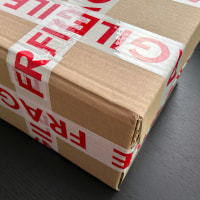 If you prefer to pack your parcels yourself and print your own shipping labels, you may one day come across the terms “insufficient packaging” or “inadequate packaging”. What do they it mean in the context of the United States Postal Service (USPS), and when might you encounter them?
“Insufficient packaging” means that the item you are shipping is not packaged properly to withstand normal handling and processing. Therefore, the USPS cannot guarantee that it will arrive at its destination intact. This term is most often used in insurance claim denials.
When filing an insurance claim for items damaged in transit, the USPS usually asks for pictures of the original packaging and the damaged item so they can assess whether the shipment was adequately packaged to withstand transit. If they determine that the box wasn’t sturdy enough or that there wasn’t enough cushioning, they will deny the claim, citing “insufficient packaging” as the reason.
You may also encounter this expression when you hand your package over for acceptance at the post office. The employee will inspect your package and may refuse to accept it if it is not properly packaged. This can happen if:
- The box is not sturdy enough or is obviously used (while reusing old boxes is not prohibited per se, a post office employee may refuse your package if the box is in poor condition).
- The package is not sealed securely enough.
- The box is obviously too small for its contents and is bulging.
- The box is too large for its contents and does not pass the “rattle test” (you can hear the items shifting inside when you shake the box).
- The box is leaking.
In this situation, you have two options: you can take the package home and repackage and relabel it properly yourself, or you can buy packing supplies at the post office, repackage your shipment, and have an employee relabel it for you.
Sometimes, shipments that are inadequately packaged are accepted for delivery because the insufficient packaging is overlooked. While they may still be delivered to the recipient if the packaging holds up or is not too badly damaged, sometimes the packaging becomes too damaged during transit, rendering the package nonmailable.
What happens next depends on the extent of the damage and the judgment of USPS employees. If the package can be salvaged and still has identifying information, such as the original or backup shipping label, the USPS may repackage and send it on or return it to the sender. In this situation, a notice about inadequate packaging may appear in the tracking status. However, the phrase “insufficient packaging” is not a recognized USPS tracking status by itself.
If the contents of the package are hazardous, leaking, or perishable, the package will most likely be destroyed rather than repackaged. If the package lacks identifying information, its contents will be sent to the USPS Mail Recovery Center. There, staff will try to identify the sender or recipient.
In short, insufficient packaging is something you should avoid at all costs when shipping with the USPS or any other postal or courier service. Here are a few simple tips to help you avoid common packaging mistakes:
- Never ship small, fragile items in bubble mailers instead of boxes.
- Make sure the box is sturdy and the right size for the items; there should be a couple inches of space on all sides for padding.
- Fill all empty space in the box with cushioning materials.
- Double box fragile items or wrap them in bubble wrap.
- Use “this side up” and “fragile” stickers if necessary.
- Seal the package with strong packing tape.
- Look up and follow the specific packaging instructions for items such as liquids.
Hopefully, these tips will help you avoid the “insufficient packaging” warning.